
Roll-off container guide
What Is a Roll-Off Dumpster?
A roll-off dumpster is an open-top steel container used temporarily for cleanouts, remodeling, construction, and other projects. A provider delivers the whole container to the site, the customer loads approved material, and the provider removes the whole container. The name comes from the way these containers move between the ground and specialized roll-off trucks, although truck mechanisms differ.
This guide focuses on the container definition and equipment mechanics. Rental decisions, written terms, and customer procedures remain with the linked topic owners.
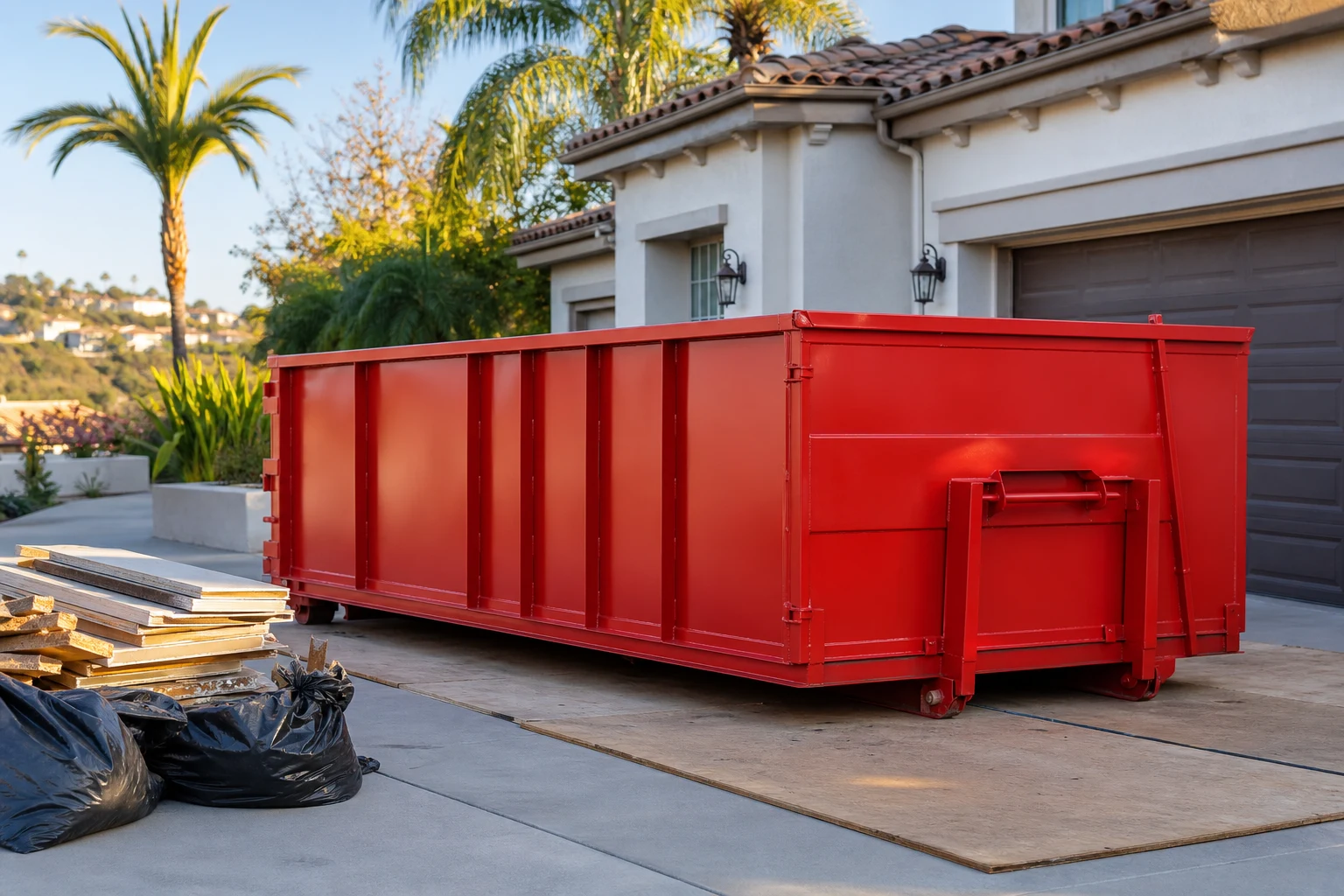
Container anatomy
What makes a dumpster a roll-off?
The container is a steel box with an open top. Underside rails guide it during truck handling, rear rollers help it transition between the truck and the ground, and a front attachment point connects to the handling equipment. A rear door may provide walk-in access where present; rear-door design is not assumed for every container.
Cable-hoist trucks draw a container along rails with a cable. Hook-lift trucks use a hydraulic arm and the front attachment point. Both are roll-off handling systems, but their motion and compatible container details can differ. Haul’n Off’s local equipment is the hook-lift example identified in its current San Diego rental materials.
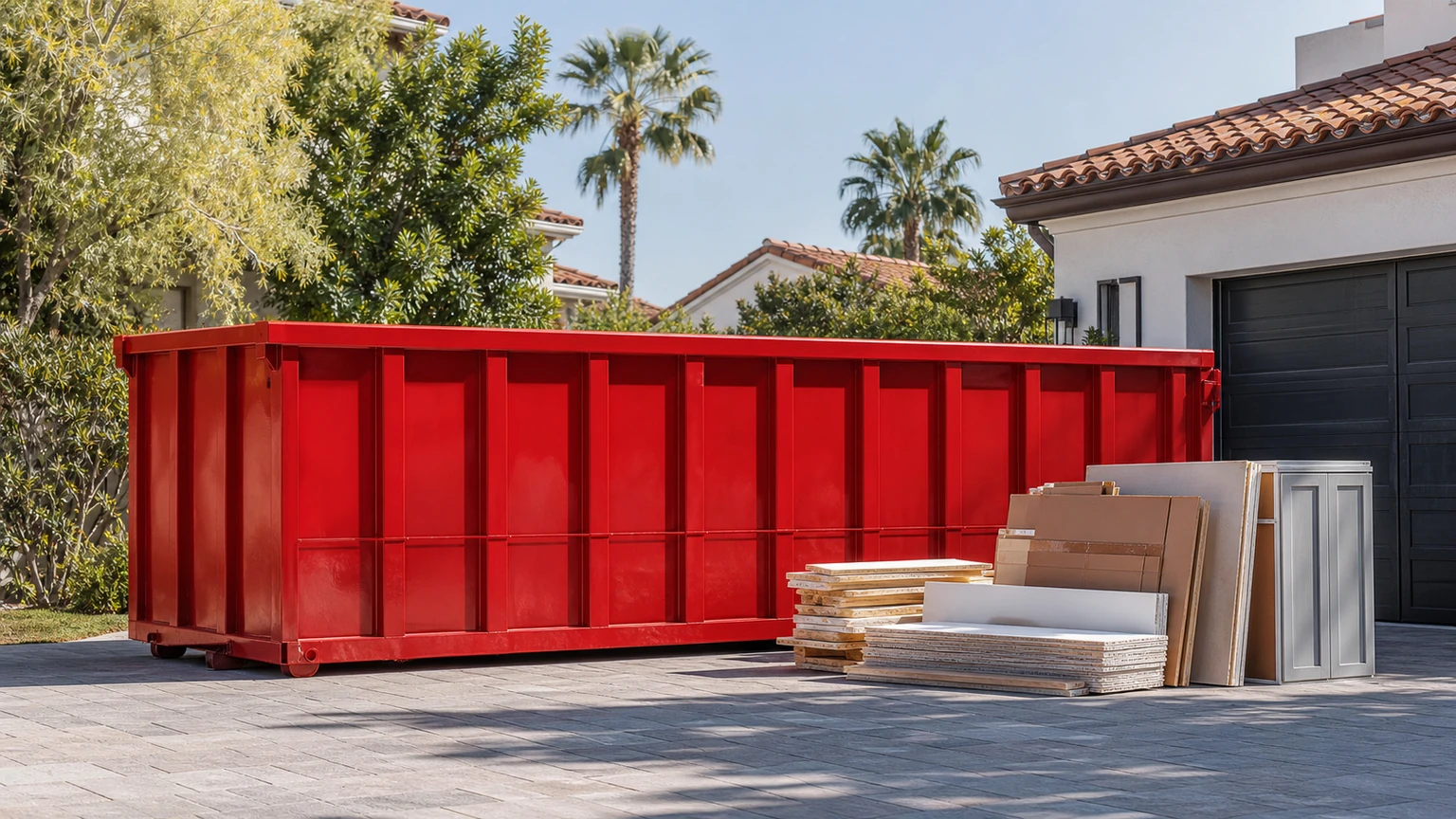
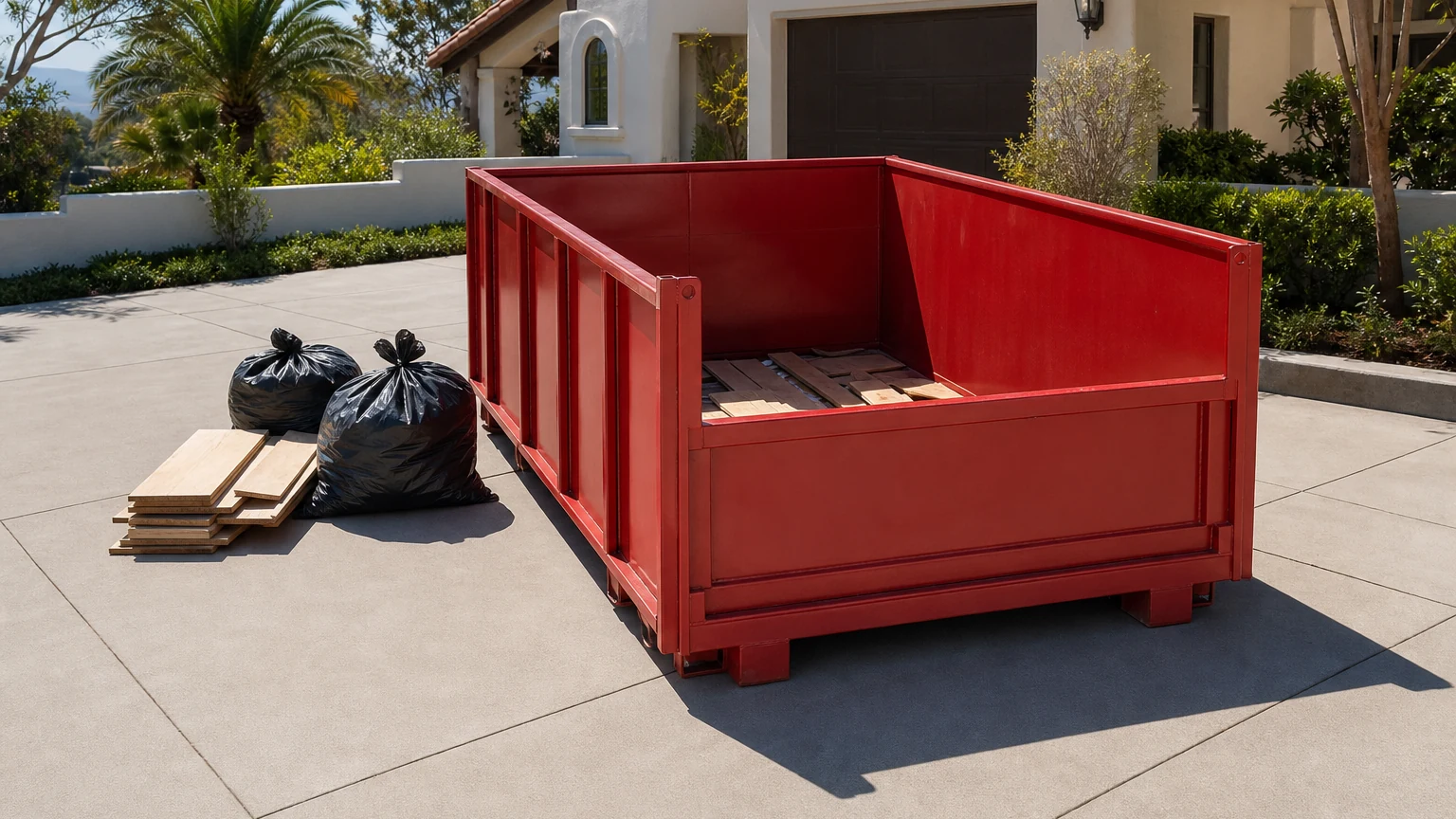
Physical lifecycle
How do roll-off dumpsters work?
The physical handoff stays simple: the provider controls the container while it is on the truck, the customer controls loading while it rests on site, and the provider controls removal.
| Stage | Provider does | Customer does |
|---|---|---|
| Delivery and placement | Brings and places the whole container | Keeps the agreed area and approach clear |
| On-site loading | Leaves the container on the ground | Loads only approved project material below the top rail or fill line |
| Removal | Returns and removes the whole container | Stops loading and leaves the approach clear |
For ordering, quote review, written terms, preparation policy, extensions, and pickup-request steps, use the process guide. Read the complete dumpster rental FAQ.
Container comparison
Roll-off vs. front-load dumpster
Both are large waste containers, but they support different physical handling and service patterns.
| Feature | Roll-off dumpster | Front-load dumpster |
|---|---|---|
| Typical use | Temporary project debris | Ongoing business or shared-property trash |
| Opening and lid | Open top | Commonly lidded with smaller loading openings |
| Truck handling | Specialized equipment places and retrieves the whole container | A collection truck commonly lifts and empties the container |
| Does the whole container leave? | Yes, for removal of the loaded container | No; it typically remains in place while being emptied |
| Common service pattern | Temporary, project-based use | Recurring collection |
This comparison is educational. Haul’n Off does not advertise recurring front-load collection.
Temporary projects
When should you use a roll-off dumpster?
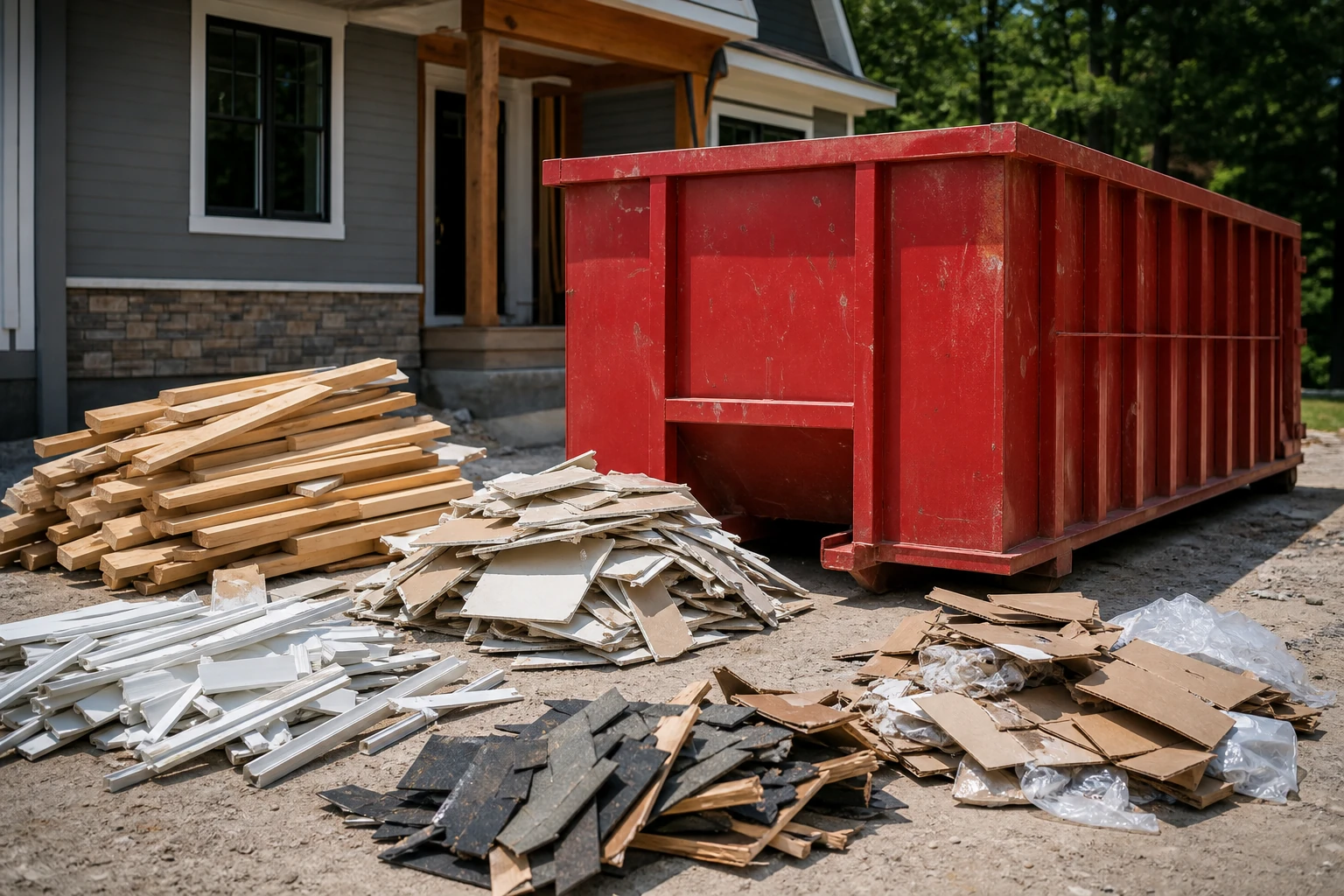
Roll-offs fit temporary cleanouts, remodeling, roofing, construction, and other approved project debris. They are not recurring trash service and are not a substitute for review of prohibited or unreviewed material.
- Temporary cleanouts
- Remodeling
- Roofing
- Construction
- Other approved project debris
Volume, dimensions, and weight
What do roll-off dumpster sizes mean?
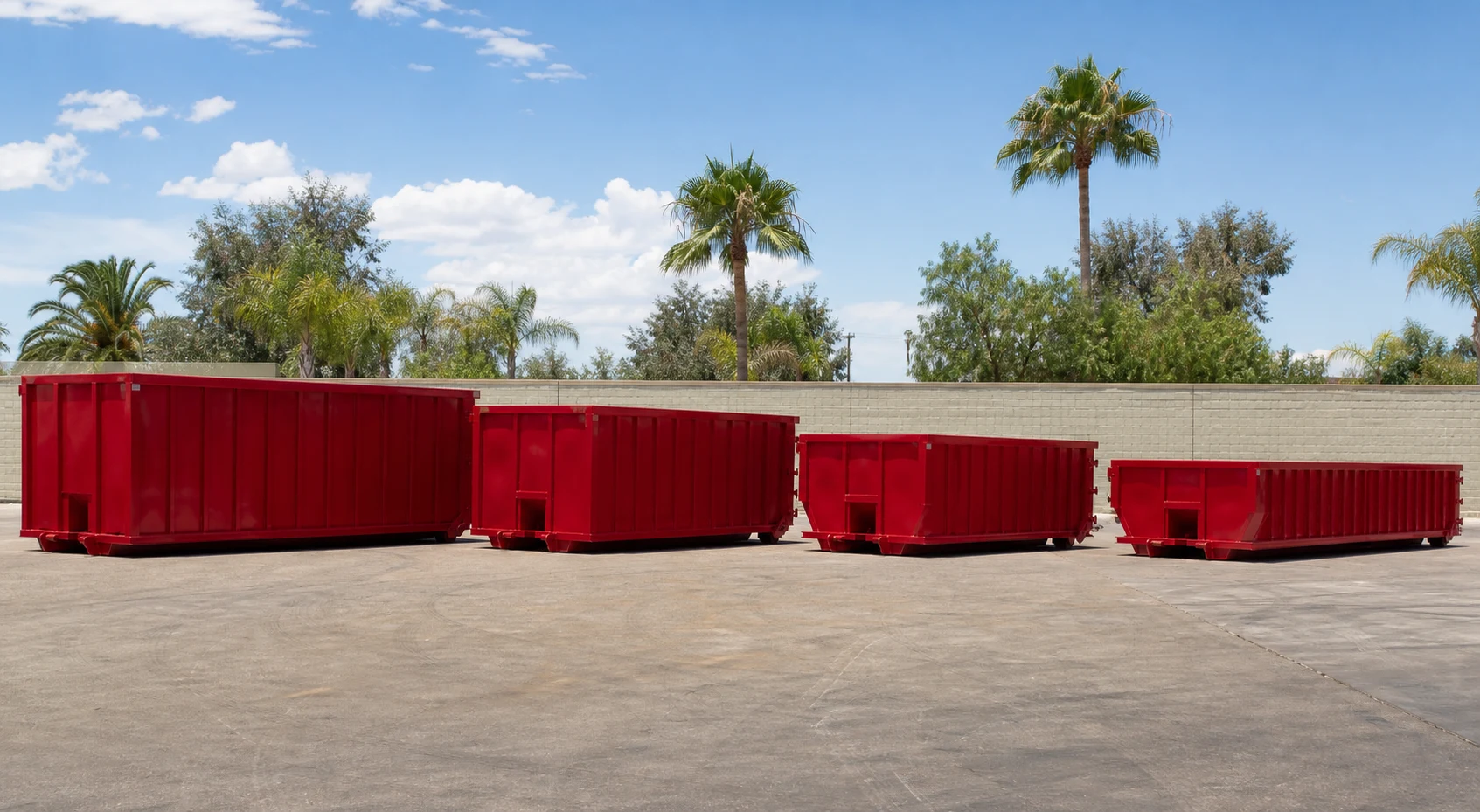
A roll-off size is a nominal volume in cubic yards. It does not describe the container’s exterior length, and dimensions vary by provider and fleet. Material type and weight can reach a load limit before the available volume is full.
For local context, Haul’n Off’s general-debris lineup is 15-, 20-, 30-, and 40-yard containers. The 10-yard lowboy is only for approved clean concrete, clean dirt, or asphalt under clean-load restrictions.
Keep the handling path clear
Loading and placement basics
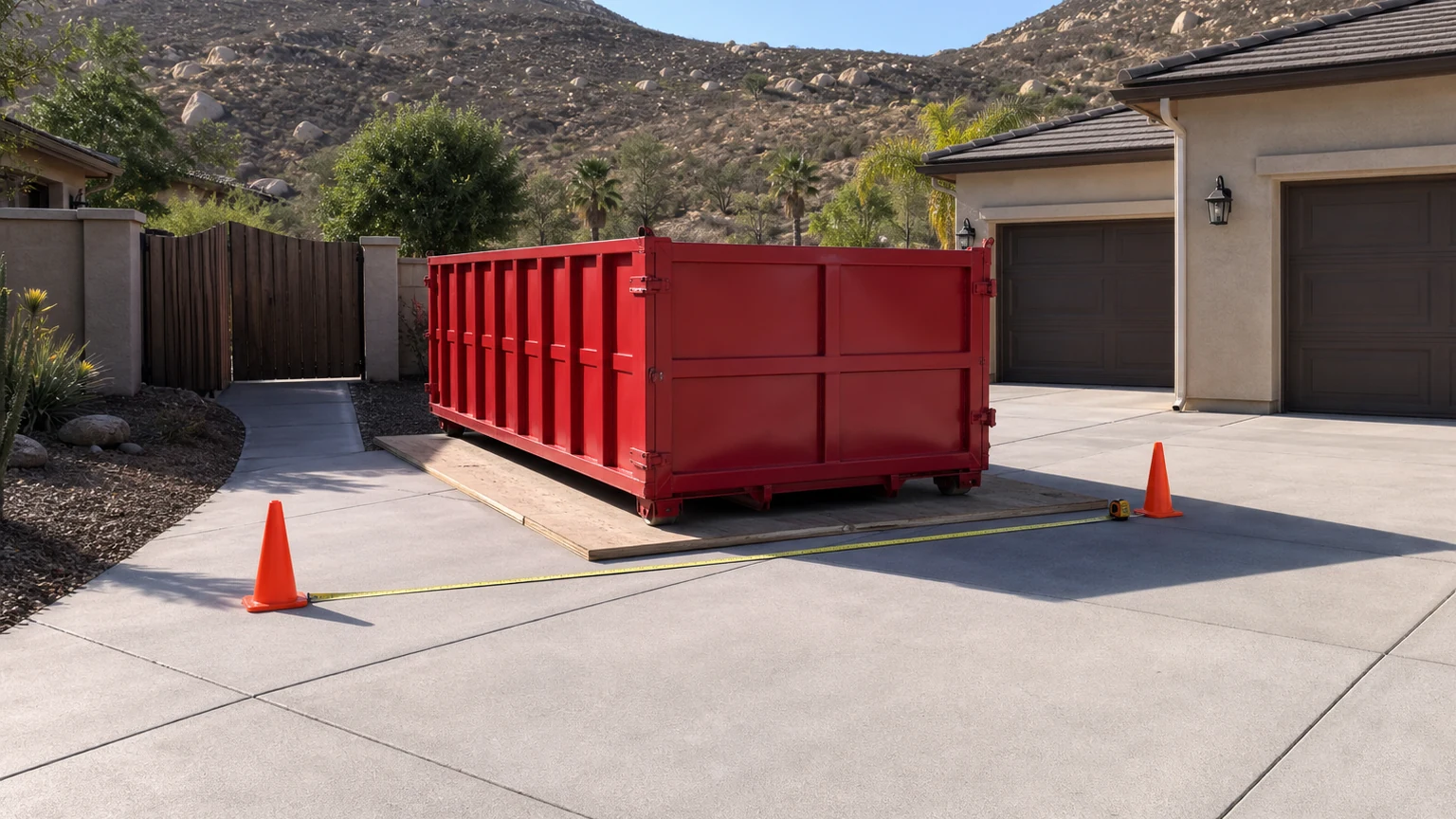
- Use a firm, level spot that can be reviewed for the container.
- Keep a clear approach and enough overhead room for physical handling.
- Keep material below the top rail or fill line.
- A customer must not move the container after delivery; contact the provider if placement needs to change.
- Street, alley, sidewalk, curb, and other public-space placement may require jurisdiction-specific permission before delivery.
Use the separate guides for prohibited-material rules, dirt-specific guidance, and the 10-yard lowboy. Those pages own the detailed policies.
Seven bounded answers
Frequently asked questions
What is a roll-off dumpster?
A roll-off dumpster is an open-top steel container used temporarily for project debris. A provider places the whole container on the ground, the customer loads approved material, and the provider later removes the whole container.
Why is it called a roll-off dumpster?
The name describes a container handled by specialized roll-off equipment. Cable-hoist trucks pull a container along rails with a cable, while hook-lift trucks use a hydraulic arm and front attachment point; the exact motion and equipment differ.
How do roll-off dumpsters work?
The provider delivers and places the whole container, the customer loads approved material while it stays on site, and the provider removes the whole container. Use the dumpster rental FAQ for ordering, written terms, preparation, extensions, and pickup-request steps.
What is the difference between a roll-off and a front-load dumpster?
A roll-off is an open-top temporary project container that leaves as a whole unit. A front-load dumpster is commonly lidded, remains in place while a collection truck empties it, and is often used for recurring service. This comparison is educational; Haul’n Off does not advertise recurring front-load collection.
Can you move a roll-off dumpster after it is delivered?
No. A customer should not move the container after delivery. Contact the provider because the placement surface, approach, overhead space, and handling path must be checked again before any change.
What do roll-off dumpster sizes mean?
The size is nominal volume in cubic yards. Exterior dimensions vary by provider and fleet, and material or weight limits can control the load before the available volume is full.
Where can a roll-off dumpster be placed?
Placement generally needs a firm, level spot, a clear approach, and enough overhead room for physical handling. Public-space placement rules vary by jurisdiction, so required permission must be checked before delivery.
Ready to compare San Diego roll-off rentals?
Move from the container basics to the commercial rental owner for current San Diego options and a separate size catalog.