Skip to content
Escondido Project FitCheck project fit ↓
Check Escondido Project Fit ↓
Dumpster Rentals Escondido, CA

Size by volume · Review density · Plan the truck path

Escondido Dumpster Rentals: Match the Bin to the Load

Start with what is leaving the property: bulky contents, remodel layers, roofing, jobsite debris, landscaping, or clean heavy material. Then compare five dumpster sizes against the load, access, dates, and exact address.

  • ✓ Five image-backed size guides
  • ✓ Volume and weight planning
  • ✓ Address-led project check

Share the exact Escondido jobsite address, debris list, placement, access notes, and preferred dates so the project can be reviewed. A request does not confirm price, inventory, service, or delivery.

Build Your Escondido Project Check
Address and project notes help us check fit

By submitting, you agree that Haul’n Off may contact you about your request. Estimates are non-binding, and submitting this form does not confirm service, pricing, availability, delivery, pickup, or permit status. Privacy Policy.

Or call (619) 720-4511 · email info@haulnoff.com

4 load lanesStart with material
5 sizes10–40 cubic yards
6 quote inputsPrice the real scope
1 addressBegin the project check
Four ways a load behaves

Start with the debris—not the yardage.

Cubic yards tell you capacity. The project materials tell you whether that capacity is useful. Sort the load into one of these starting lanes before choosing a dumpster.

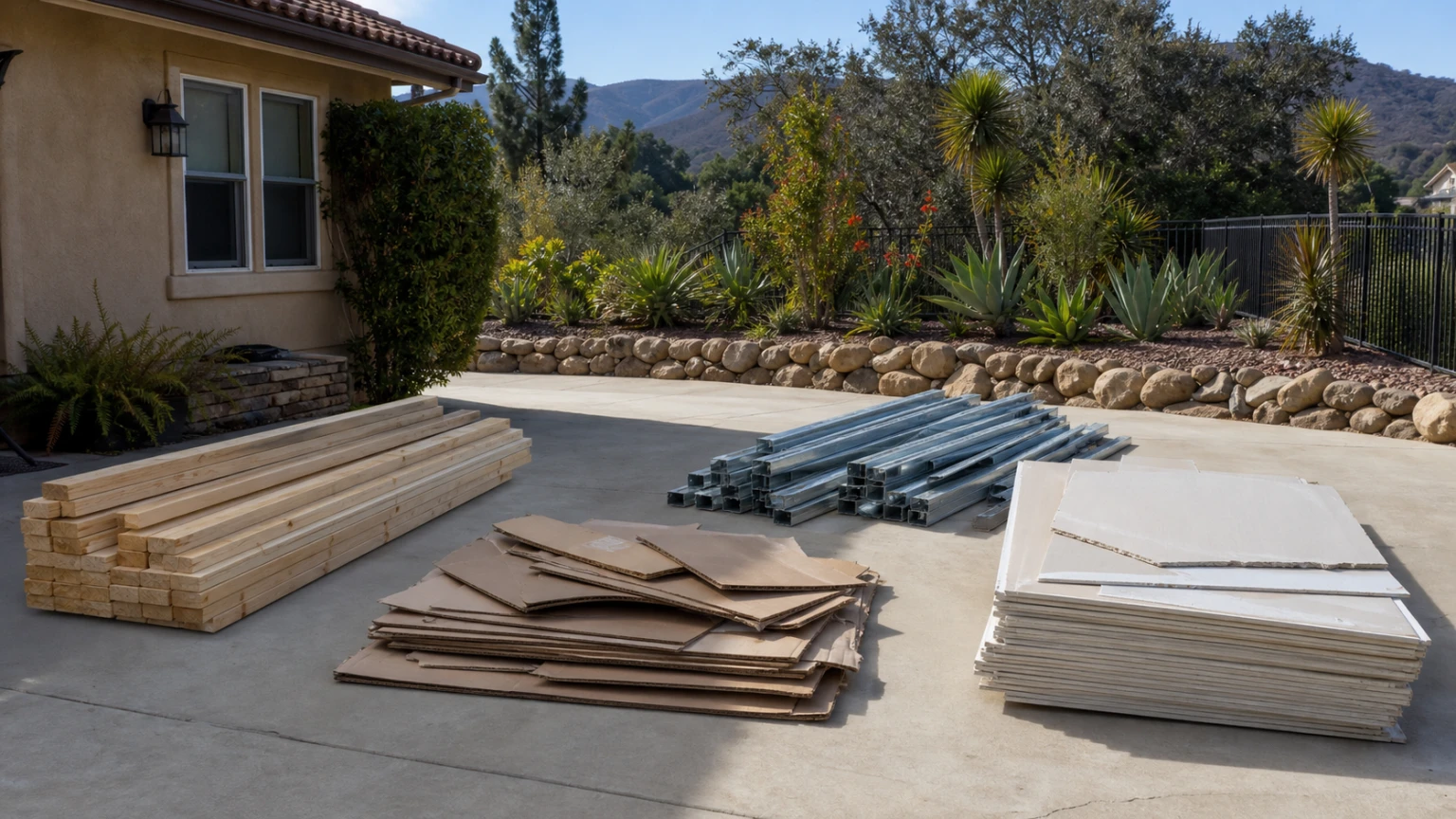
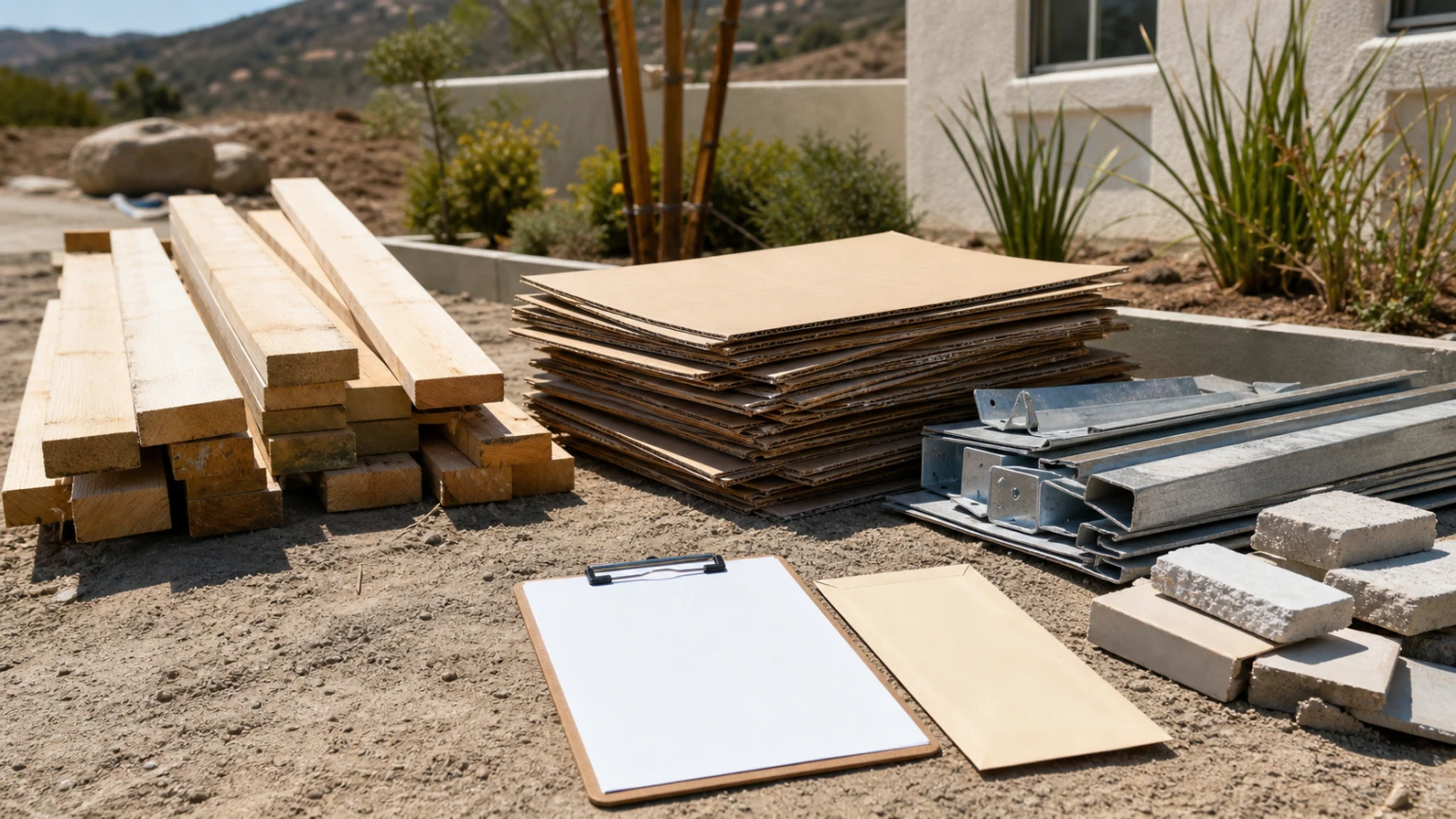
Lumber, cardboard, metal, and gypsum separated into distinct project-debris groups
Separating bulky, construction, recyclable, and dense material makes both size and handling questions easier to answer.
01Bulky cleanup

Furniture, boxes, and household contents

Whole-home resets, estate clear-outs, garage cleanups, and move-outs usually run out of container space before they run out of weight. Count rooms, large furniture, shelving, and bagged material before comparing capacity.

Start by comparing 15 and 20 yards; larger property clear-outs may move into 30 or 40 yard territory.

Plan a property cleanout →
02Layered tear-out

Cabinets, flooring, drywall, and fixtures

Interior remodeling produces several material layers at once. Cabinet boxes and drywall create volume, while tile, counters, and mortar add density. List each layer instead of describing the project as “a kitchen” or “a bathroom.”

A 20 or 30 yard comparison begins with room count, demolition depth, and the dense materials in the mix.

Review temporary project planning →
03Phased jobsite

Roofing, framing, demolition, and packaging

Contractor debris changes as a job advances. Tear-off, framing, rough work, finish work, and packaging can each create different load profiles, so the dumpster schedule should follow the active phase.

Compare 30 and 40 yards for sustained bulky output; treat roofing and other weight-sensitive material as a separate review.

See construction dumpster guidance →
04Dense clean load

Concrete, soil, asphalt, brick, stone, or tile

Heavy debris can reach a weight limit while the container still looks partly empty. Keep eligible clean dense material separate from wood, furniture, roofing, green waste, and mixed construction debris.

Begin with the shallow 10 yard lowboy and identify the material, approximate quantity, and whether the load is clean.

Open the lowboy guide →
Five dumpsters · Two sizing rules

Use volume for bulky loads and weight for dense loads.

The 15–40 yard containers scale general-debris capacity. The shallow 10 yard lowboy begins the clean heavy-material conversation.

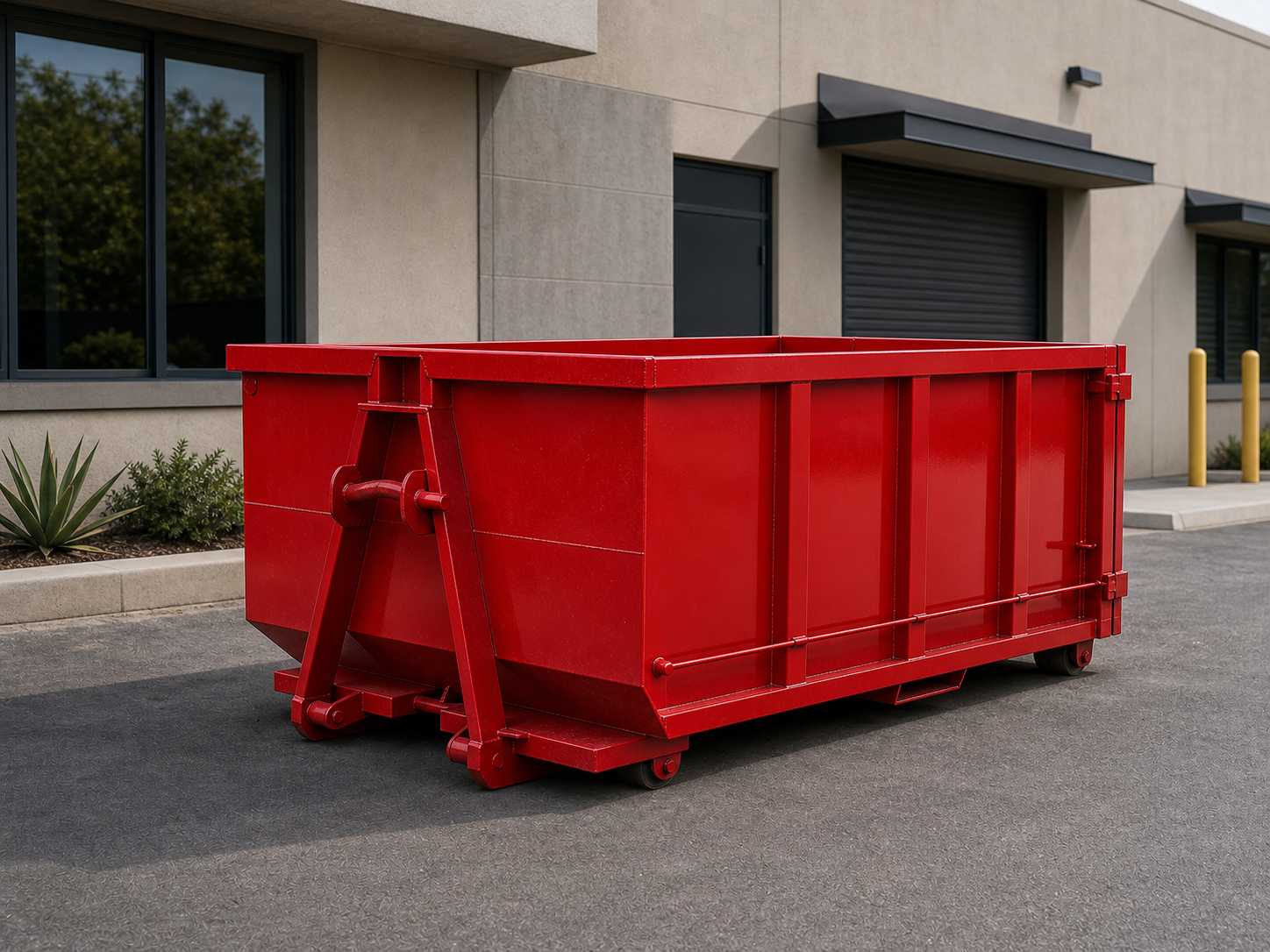
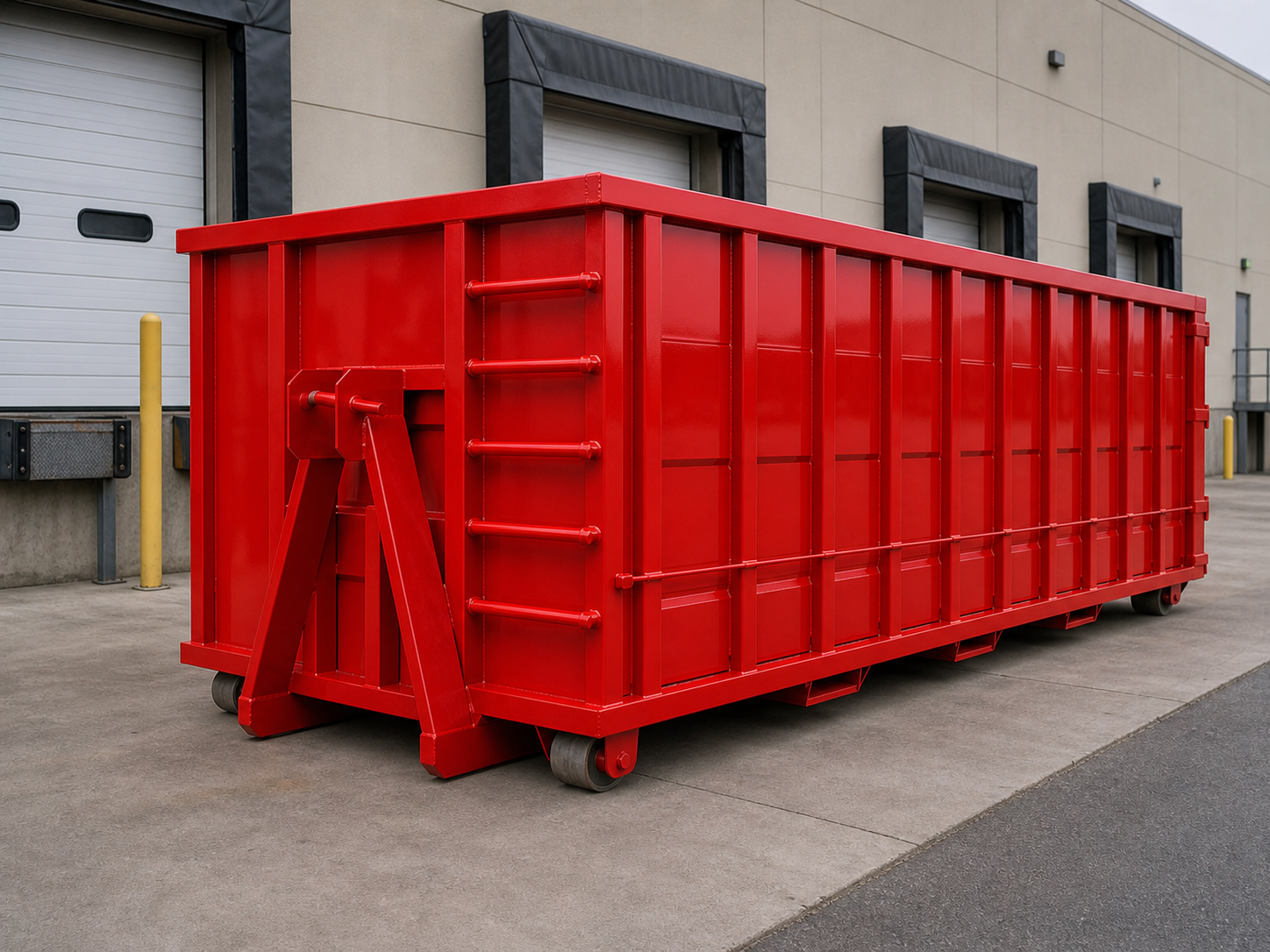
15 Yard Dumpster red dumpster shown in side profile
Volume-first sizing

15 Yard Dumpster

11.5'L × 8'W × 5'H

Medium cleanouts · Small bath remodels · Yard waste

Open size guide →
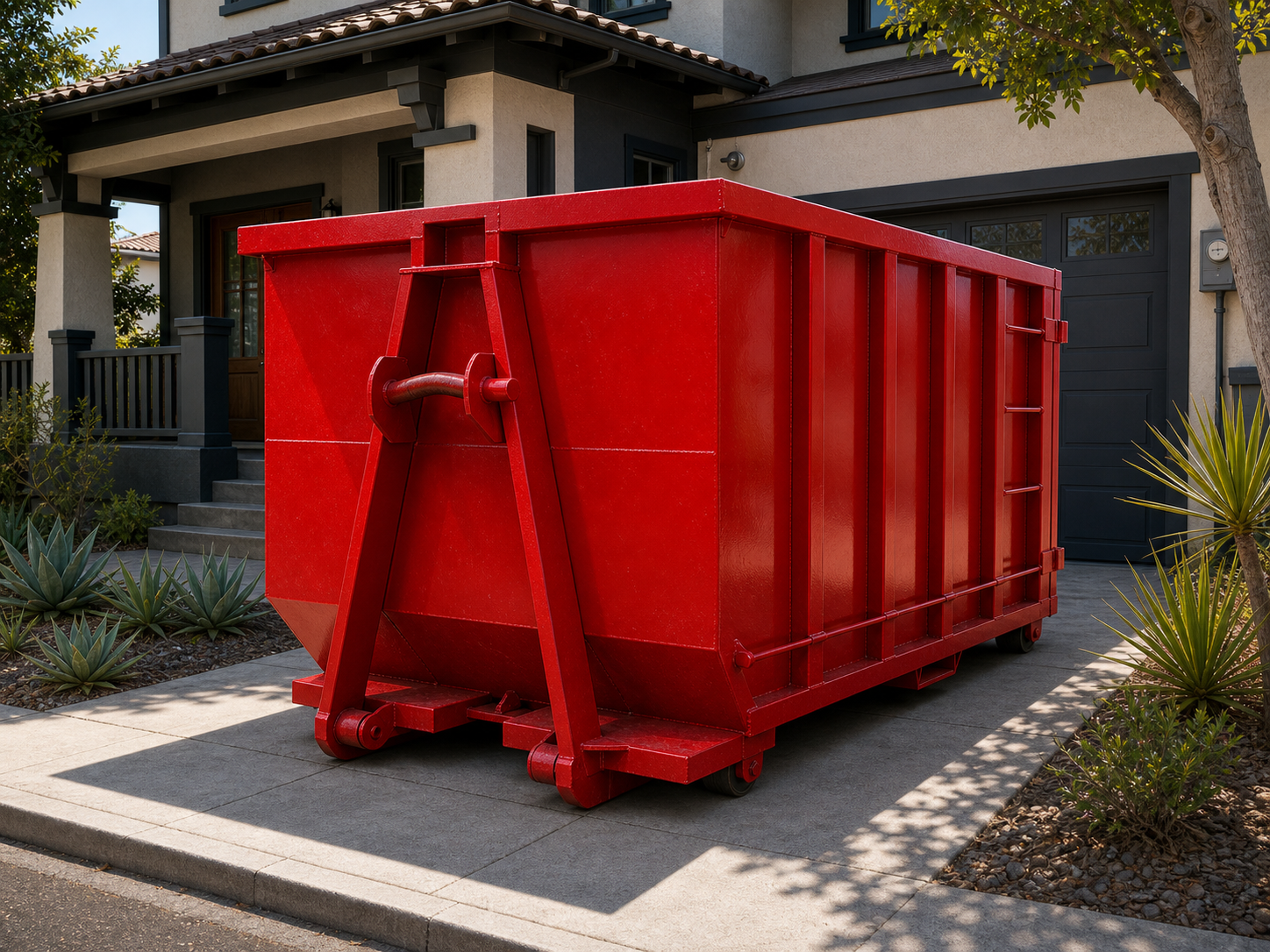
20 Yard Dumpster red dumpster shown in side profile
Volume-first sizing

20 Yard Dumpster

11'L × 8'W × 6'H

Construction debris · Roofing tear-offs · Larger cleanouts

Open size guide →
30 Yard Dumpster red dumpster shown in side profile
Volume-first sizing

30 Yard Dumpster

18'L × 8'W × 6.5'H

Large remodels · Whole-home cleanouts · Commercial jobs

Open size guide →
40 Yard Dumpster red dumpster shown in side profile
Volume-first sizing

40 Yard Dumpster

18'L × 8'W × 7.5'H

Major construction · Large demolition · Industrial cleanouts

Open size guide →
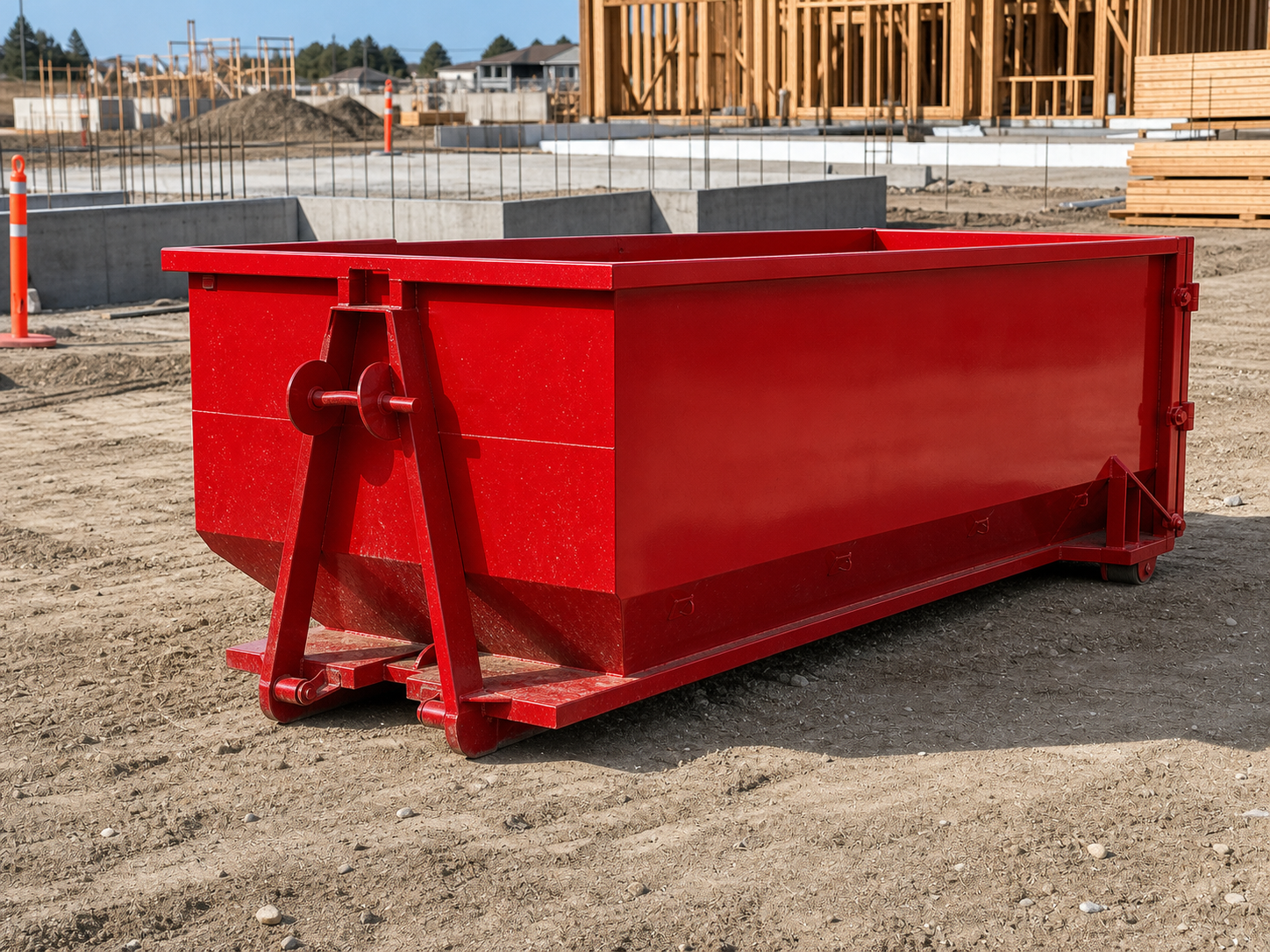
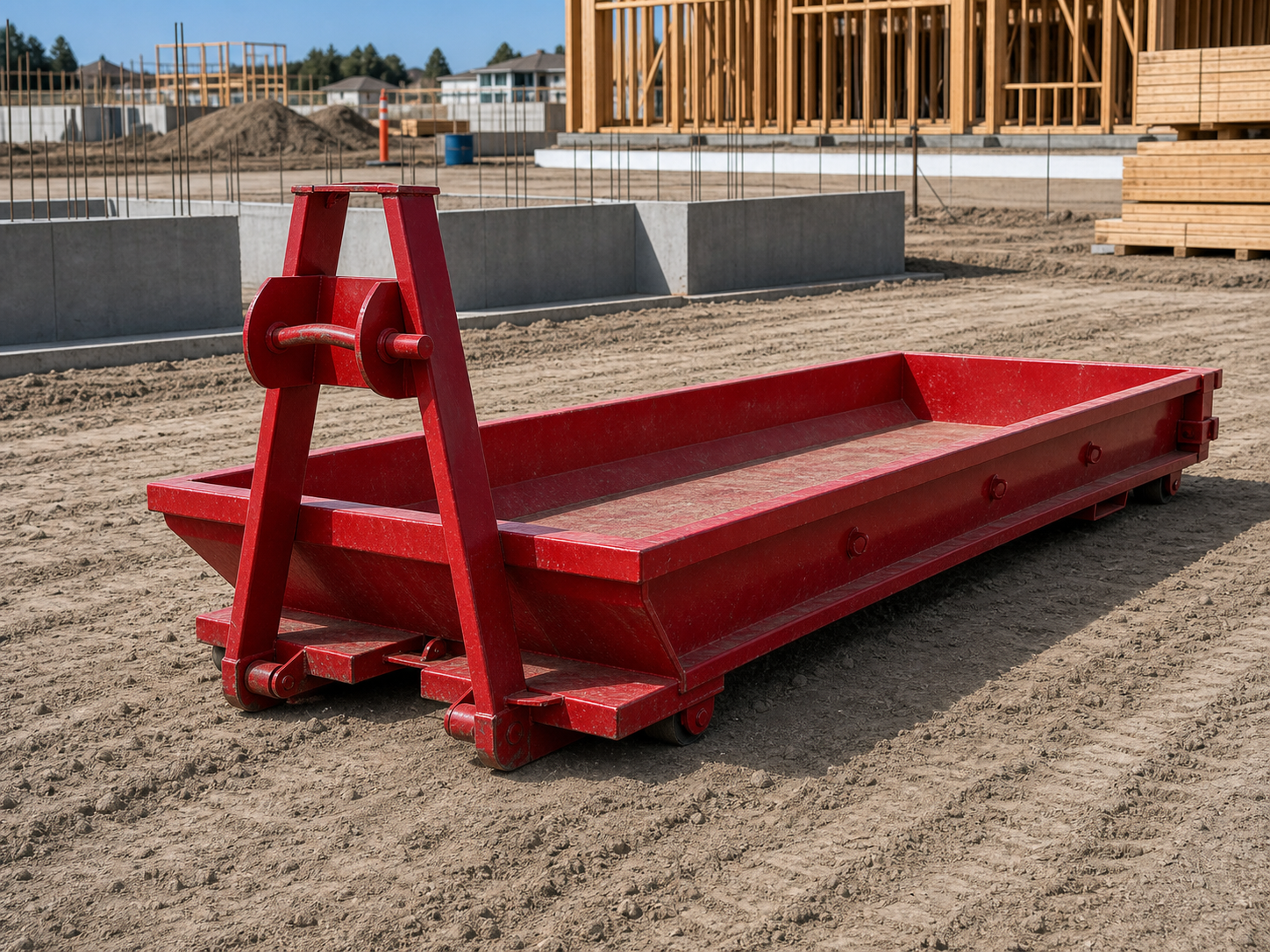
10 Yard Lowboy red dumpster shown in side profile
Weight-first sizing

10 Yard Lowboy

18'L × 8'W × 2'H

Heavy materials only · Driveway tear-outs · Excavation & ADU dirt

Open size guide →
Price the scope you actually have

Six inputs shape an Escondido dumpster quote.

A reliable quote starts with facts, not a city keyword or a guessed dumpster size.

Review cost factors →
01

Street address and ZIP

The exact jobsite anchors route fit, placement review, and the current collection path.

02

Container capacity

A 15 yard cleanup box and a 40 yard construction container solve different volume problems.

03

Material category

Bulky contents, roofing, mixed construction, landscaping, and clean heavy debris are reviewed differently.

04

Estimated weight

Dense material can change the load plan even when the pile occupies modest space.

05

Delivery-to-pickup window

Requested dates, project phases, and possible extensions shape the scheduling terms.

06

Set-down and truck access

Gate width, slope, turning room, overhead clearance, and public-space questions can alter the plan.

Use the project check to send all six inputs together. Review the project-specific terms before scheduling.

Project plans, material samples, measuring tools, and a calendar organized for a dumpster request
A useful request connects the debris list to the measured set-down area, access notes, and project calendar.
Build the load plan

Answer volume, weight, and handling separately.

Three short answers reveal more than a broad project label and reduce the chance of comparing the wrong containers.

Volume question

How much physical space will the debris occupy?

Count rooms, large objects, tear-out layers, and recurring jobsite output. Bulky low-density material usually pushes the decision toward more cubic yards.

Weight question

Which materials become heavy before the box looks full?

Eligible clean concrete, dirt, soil, rock, asphalt, brick, stone, and tile may go only in a reviewed 10-yard lowboy. They are prohibited in every tall general-debris container and cannot be mixed with general debris.

Handling question

Which materials are prohibited?

Hazardous materials, paint, liquids, chemicals, batteries, propane, tires, electronics, medical waste, and asbestos are prohibited. Do not load them. Appliances require Haul’n Off approval before loading.

Four project tracks

Match the dumpster schedule to the work.

The same property can create very different debris from one phase to the next.

Track A

Property reset

Stage rooms or units, separate questionable items, count bulky pieces, and keep the loading route clear as the cleanup moves through the property.

Track B

Interior demolition

List cabinets, counters, flooring, drywall, tile, fixtures, and packaging by material so volume and density do not disappear inside one remodel label.

Track C

Roof or exterior work

Estimate roof area, layers, decking, siding, fencing, or landscape tear-out, then review weight and material separation before the container arrives.

Track D

Active contractor site

Match delivery and removal to the debris-producing phase, preserve crew access, and avoid leaving the pickup route blocked by equipment or materials.

The truck needs a route—not just a rectangle

Measure the approach before marking the set-down area.

A container may fit the final spot while the truck cannot safely reach or leave it. Walk the entire path from the street to the placement point.

  • ✓ Measure the usable set-down length and width
  • ✓ Measure gates and the narrowest approach point
  • ✓ Identify slope, soft ground, pavers, or delicate surfaces
  • ✓ Check branches, wires, eaves, and other overhead limits
  • ✓ Preserve the truck’s approach, turning, and exit path
  • ✓ Keep sidewalks, doors, fire access, and work routes open
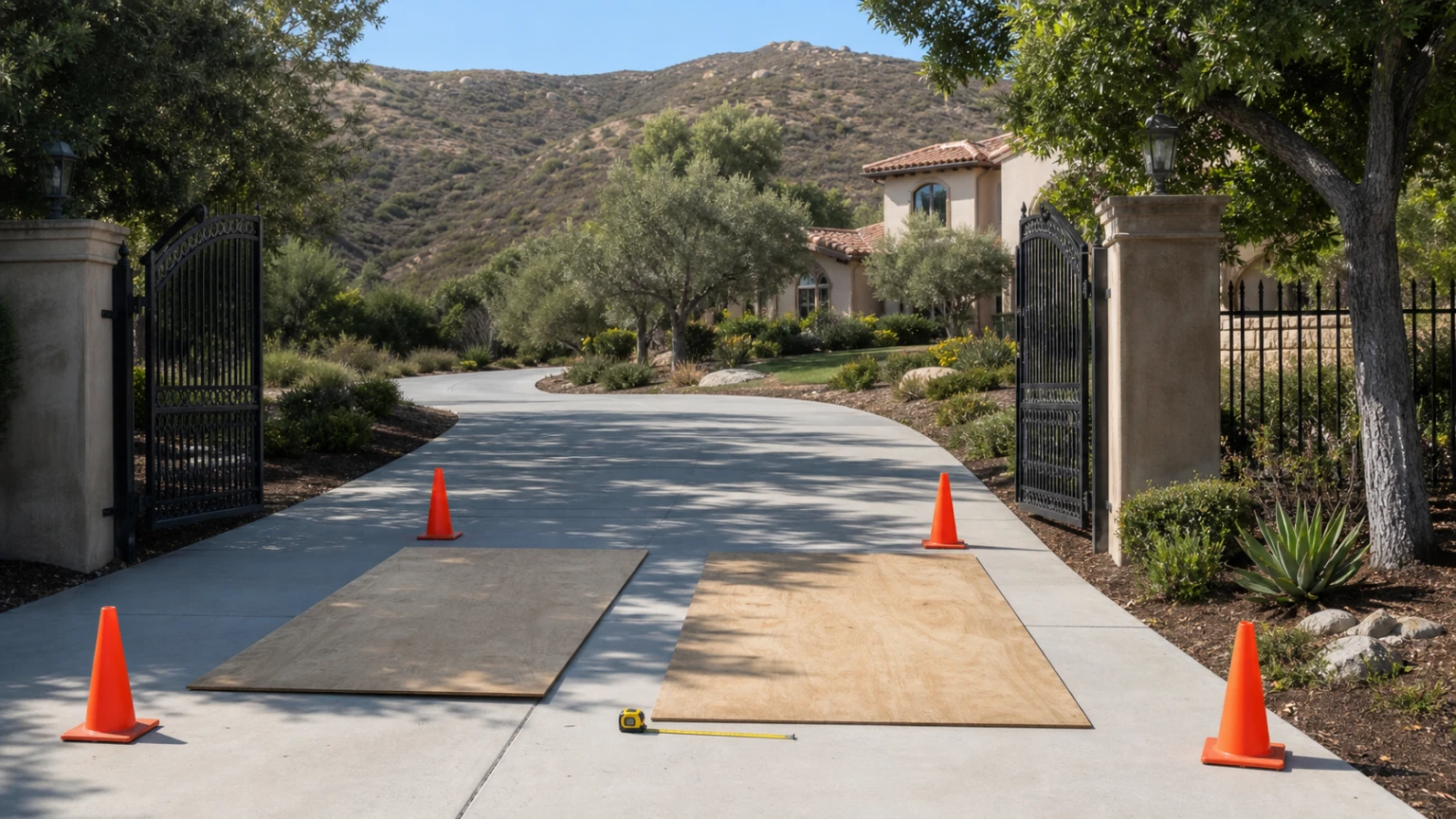
Protective boards, cones, and measuring tools marking a private driveway set-down area
Protect the surface, mark the intended placement, and keep the access lane usable from delivery through pickup.
One route · Three checkpoints

Keep delivery, loading, and pickup connected.

Before

Mark the location and clear the approach

Move vehicles and equipment, unlock gates, mark the intended placement, and reconfirm any surface-protection or public-space question.

During

Load the reviewed material safely

Keep the load level and below the top rail, distribute weight, prevent debris from hanging over the sides, and do not add unreviewed material.

Pickup

Restore the same clear truck path

Secure loose debris, remove new obstructions, reopen gates, move parked vehicles, and make sure the container can be reached without crossing an active work zone.

Two official project checks

Use City guidance only when the project triggers it.

Most of the rental decision is load, size, access, and timing. Building-permit closeout and public-space placement can add a separate City step.

Construction and demolition projects

The City says covered projects must use a Construction Waste Management Plan and reuse, salvage, or recycle at least 65% of nonhazardous C&D debris. Confirm the current requirement for the permit scope and retain required documentation.

Read City C&D guidance ↗

Street or public-space placement

Field Engineering processes encroachment permits for work in City right-of-way. Before using a street, sidewalk, parkway, or other public space, ask what approval or traffic-control documentation applies to the exact location.

Open Field Engineering ↗
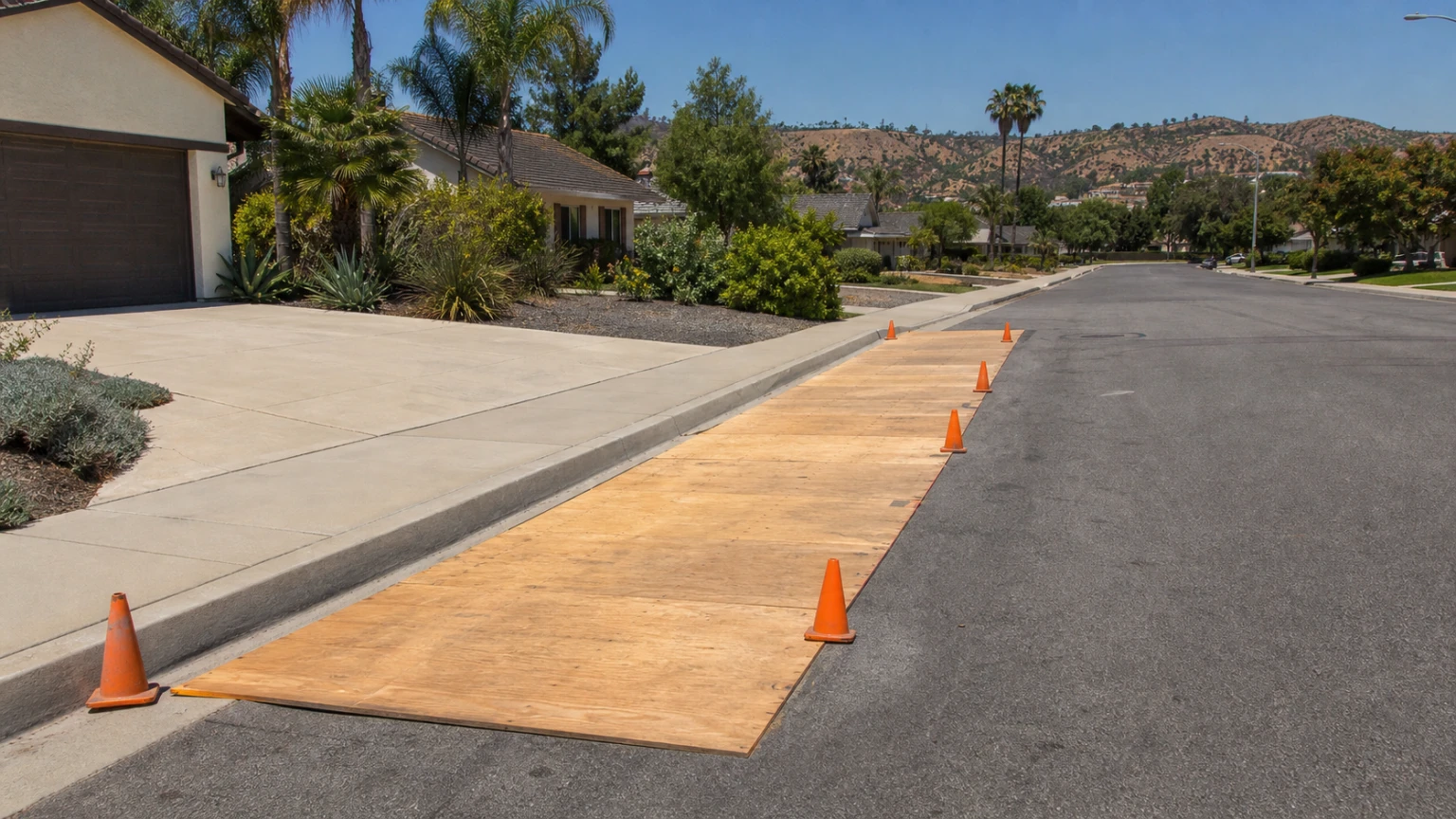
Cones and protective boards marking an empty curbside area while leaving the sidewalk open
A curb lane or sidewalk edge creates a different approval question than a measured private set-down area.
Reusable and recyclable project materials staged separately with blank closeout records
For covered permitted work, keep required diversion records and closeout documents aligned with the current City process.
Escondido dumpster rental questions

Answers for sizing, access, loading, and pickup.

What project details help match an Escondido dumpster rental to the load?

Send the exact address, project type, complete debris list, approximate amount, intended placement area, gate or access notes, and preferred delivery and pickup dates. Debris-pile and set-down-area photos can help when volume or clearance is difficult to describe.

Which dumpster size works for a garage, home, or estate cleanout?

A focused garage or room cleanup may fit a 15 or 20 yard dumpster, while a whole-home or estate clear-out may need 30 or 40 yards. Bulky furniture can consume space quickly, so count large pieces and estimate the number of rooms before choosing.

How should concrete, dirt, asphalt, brick, stone, or tile be loaded?

Eligible clean concrete, dirt, soil, rock, asphalt, brick, block, stone, pavers, and tile may go only in a reviewed 10-yard lowboy. Never load them in a general-debris dumpster or mix them with furniture, roofing, wood, green waste, or construction debris.

What changes an Escondido dumpster rental quote?

The exact jobsite, container size, debris category, estimated weight, rental window, and placement or access conditions all affect the quote. Share those details before relying on a price because a bulky cleanout and a dense demolition load can use the same cubic-yard space very differently.

How much room should I plan for delivery and pickup?

Measure the set-down area, gate opening, approach, turning space, slope, and overhead clearance. Move vehicles, unlock gates, trim or identify low branches, and keep the return path open so the pickup conditions match the delivery plan.

Does someone need to be present when the dumpster arrives?

Confirm the delivery instructions for the specific project. A clearly marked private placement area and open access may reduce the need for in-person direction, but do not assume an unattended set-down is appropriate when the address, gate, slope, surface, or placement is uncertain.

How can I plan a dumpster around a phased remodel or construction schedule?

Match the container to the active debris phase rather than the full project label. Demolition, framing, roofing, finish work, and packaging can create different volume and weight patterns, so coordinate the delivery and removal dates with the phase that produces the intended load.

How should I prepare the dumpster for pickup?

Keep debris below the top rail, distribute the load safely, remove anything hanging over the sides, close the access route to new traffic, unlock gates, and move vehicles or equipment out of the truck path. Reconfirm any loose or questionable material before collection.

What if the dumpster would extend into an Escondido street or public right-of-way?

Keep the container on authorized private property when possible. Before using a street, sidewalk, parkway, or other public right-of-way, contact the City of Escondido Field Engineering team to confirm whether approval, an encroachment permit, or traffic-control documentation applies to the exact location.

How do I start an Escondido project-fit review?

Use the project-check form to securely submit the address, load type, preferred size, debris amount, dates, and access notes to Haul'n Off’s CRM for staff review. Submission does not by itself confirm service, price, timing, availability, delivery, or permit status.


Ready to describe the actual load?

Send the address, debris, placement, and dates together.

Compare the project against the five dumpster sizes and review the specific terms before scheduling.